Bricks and Mortar

312pp
ISBN 9781903155394
'Helen Ashton has the power of writing about people as though she had known them all her life. One feels that one has lived next door to Martin Lovell ever since the day when he first set up house with Letty in chambers on the north side of Gray's Inn Square' wrote the TLS in 1932. Unusually, Bricks and Mortar is about the life of a London architect from the 1890s to the early 1930s; it is, as well, about a 'very decent, simple, sweet-minded creature' who realises that his marriage has been a mistake yet makes the best of things. Because he has dignity, common sense and kindness, enjoys his working life and accepts his family as it is, he has his own special brand of heroism: the book's title refers not just to a solidly built building but to a staunch and brick-like personality.
We meet Martin when he is 24 in a wonderfully written and good-humoured first chapter, in which, Forsterianly, over dinner at their pension in Rome he meets 18-year-old Letty and her mother Lady Stapleford, a widow who is 'quietly, desperately determined to marry her pretty daughter to the first eligible comer.' Martin stands no chance and soon the couple are wed.
But Bricks and Mortar differs from thousands of similar novels because Martin was 'an architect who was very much in love with his profession': the book traces his professional life over thirty-five years, and anyone with even the faintest interest in houses will love the details about Martin's life as a London architect, the houses he lives in and the changing styles of the houses he builds, as well as his occasional existential crises about whether designing people's kitchen extensions is really his life's purpose.
Helen Ashton is in some respects a typical Persephone author, being an extremely good, once very popular but now forgotten novelist who has not previously been revived because she is neither feminist enough nor romantic enough; of her kind, however, she is reliably and delightfully readable.
Endpaper
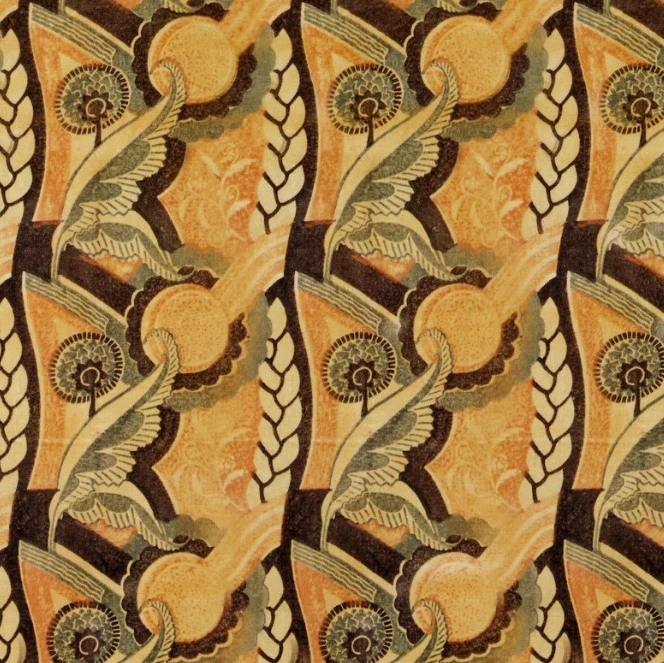
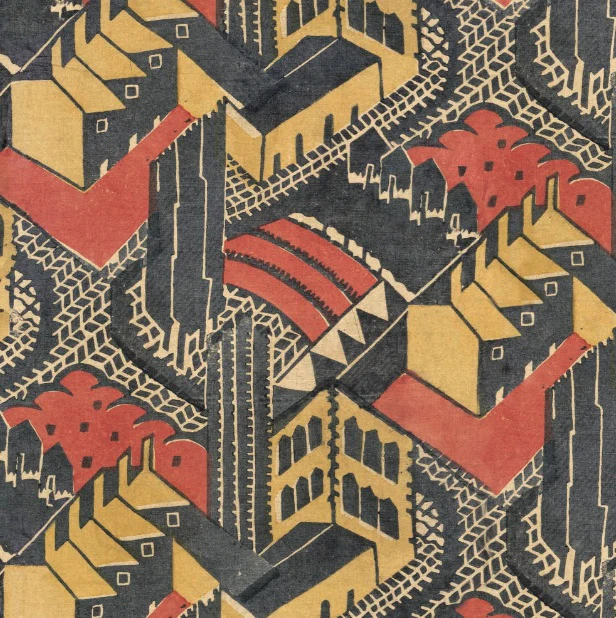
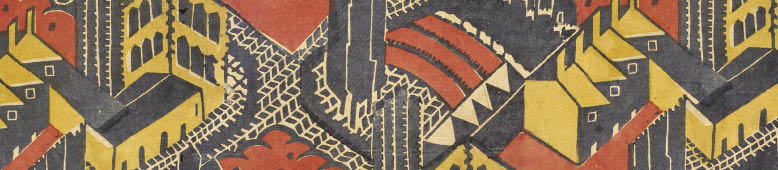
The endpapers are taken from a 1930 block-printed linen furnishing fabric, 'Welwyn Garden City', designed by Doris Gregg for Footprints Ltd.
Picture Caption
The original cover for Bricks and Mortar
Description
312pp
ISBN 9781903155394
'Helen Ashton has the power of writing about people as though she had known them all her life. One feels that one has lived next door to Martin Lovell ever since the day when he first set up house with Letty in chambers on the north side of Gray's Inn Square' wrote the TLS in 1932. Unusually, Bricks and Mortar is about the life of a London architect from the 1890s to the early 1930s; it is, as well, about a 'very decent, simple, sweet-minded creature' who realises that his marriage has been a mistake yet makes the best of things. Because he has dignity, common sense and kindness, enjoys his working life and accepts his family as it is, he has his own special brand of heroism: the book's title refers not just to a solidly built building but to a staunch and brick-like personality.
We meet Martin when he is 24 in a wonderfully written and good-humoured first chapter, in which, Forsterianly, over dinner at their pension in Rome he meets 18-year-old Letty and her mother Lady Stapleford, a widow who is 'quietly, desperately determined to marry her pretty daughter to the first eligible comer.' Martin stands no chance and soon the couple are wed.
But Bricks and Mortar differs from thousands of similar novels because Martin was 'an architect who was very much in love with his profession': the book traces his professional life over thirty-five years, and anyone with even the faintest interest in houses will love the details about Martin's life as a London architect, the houses he lives in and the changing styles of the houses he builds, as well as his occasional existential crises about whether designing people's kitchen extensions is really his life's purpose.
Helen Ashton is in some respects a typical Persephone author, being an extremely good, once very popular but now forgotten novelist who has not previously been revived because she is neither feminist enough nor romantic enough; of her kind, however, she is reliably and delightfully readable.
Endpaper
The endpapers are taken from a 1930 block-printed linen furnishing fabric, 'Welwyn Garden City', designed by Doris Gregg for Footprints Ltd.
Picture Caption
The original cover for Bricks and Mortar