Manja

TRANSLATED BY KATE PHILLIPS
PREFACE BY EVA IBBOTSON
552pp
ISBN 9781903155295
Written in 1936-7 by a young Austrian playwright living in exile in London, Manja opens, radically, with five conception scenes all set on the same night in 1920. In the midst of the turbulent Germany of the Weimar Republic, it goes on, equally dramatically, to describe the lives of the children and their families up until 1933 when the Nazis came to power. The four boys and one girl, Manja, become friends, but their companionship is doomed because of the differences between their parents; one father is a left-wing activist, another a Nazi, another a financier, another a Jewish musician.
Yet Manja is far from being a political novel. Its startling originality lies in the way the the political background is perceived, steadily, from the child's point of view. We have all read about Germany in the 1930s from the historian's angle; there is, however, no novel we know of which sees German life during the period from the end of the First World War until 1933 in quite this clear-sighted way. Certainly though it bears fascinating comparison with PB no. 152 Crooked Cross by Sally Carson, who was born the same year as Anna Gmeyner.
'What is so unusual,' wrote the playwright Berthold Viertel in 1938, 'is the way the novel contrasts the children's community - in all its idealism, romanticism, decency and enchantment - with the madhouse community of the adults.' Meanwhile the Manchester Guardian called it 'a remarkable novel, a book of truth and tenderness' and the New York Times referred to it as 'a tale of terrible beauty'.
The Preface is by the author's daughter, writer Eva Ibbotson; the new translation is by Kate Phillips.
Also available as a Persephone eBook.
For more on Manja, have a look at the Persephone Perspective.
Endpaper
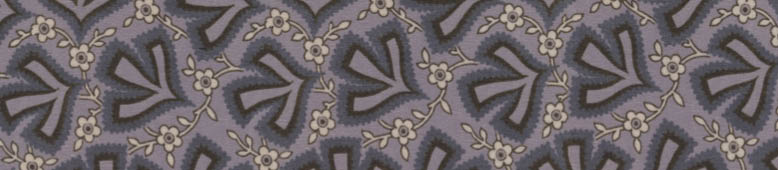
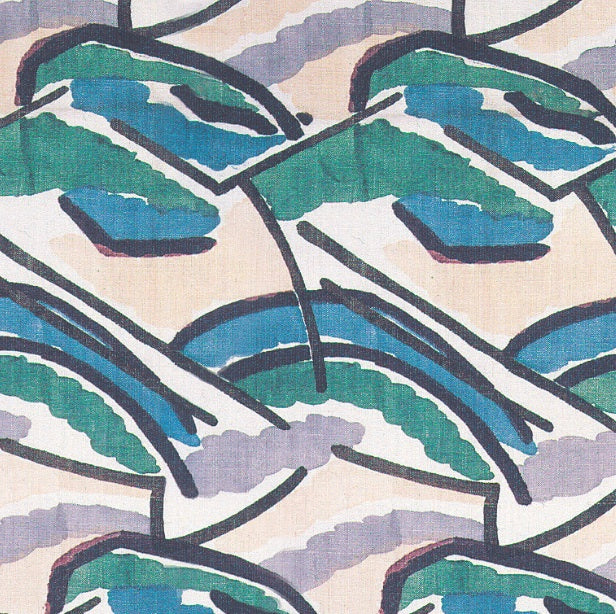
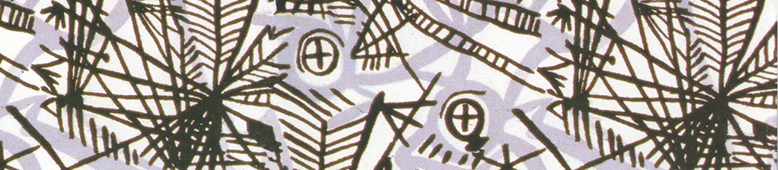
The endpaper we have used is a Wiener Werkstätte fabric called 'Paul' designed in 1927 in Vienna by Clara Posnanski; the horizontal black lines give a sinister quality to an otherwise gentle design.
Picture Caption
A street in Frankenthal, Germany in 1933, newly renamed Adolf Hitler Strasse
Original: $55.51
-65%$55.51
$19.43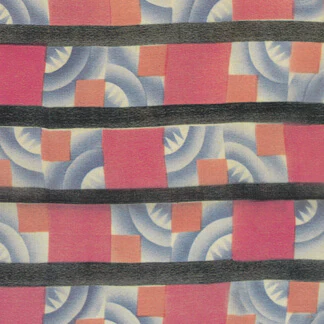

Description
TRANSLATED BY KATE PHILLIPS
PREFACE BY EVA IBBOTSON
552pp
ISBN 9781903155295
Written in 1936-7 by a young Austrian playwright living in exile in London, Manja opens, radically, with five conception scenes all set on the same night in 1920. In the midst of the turbulent Germany of the Weimar Republic, it goes on, equally dramatically, to describe the lives of the children and their families up until 1933 when the Nazis came to power. The four boys and one girl, Manja, become friends, but their companionship is doomed because of the differences between their parents; one father is a left-wing activist, another a Nazi, another a financier, another a Jewish musician.
Yet Manja is far from being a political novel. Its startling originality lies in the way the the political background is perceived, steadily, from the child's point of view. We have all read about Germany in the 1930s from the historian's angle; there is, however, no novel we know of which sees German life during the period from the end of the First World War until 1933 in quite this clear-sighted way. Certainly though it bears fascinating comparison with PB no. 152 Crooked Cross by Sally Carson, who was born the same year as Anna Gmeyner.
'What is so unusual,' wrote the playwright Berthold Viertel in 1938, 'is the way the novel contrasts the children's community - in all its idealism, romanticism, decency and enchantment - with the madhouse community of the adults.' Meanwhile the Manchester Guardian called it 'a remarkable novel, a book of truth and tenderness' and the New York Times referred to it as 'a tale of terrible beauty'.
The Preface is by the author's daughter, writer Eva Ibbotson; the new translation is by Kate Phillips.
Also available as a Persephone eBook.
For more on Manja, have a look at the Persephone Perspective.
Endpaper
The endpaper we have used is a Wiener Werkstätte fabric called 'Paul' designed in 1927 in Vienna by Clara Posnanski; the horizontal black lines give a sinister quality to an otherwise gentle design.
Picture Caption
A street in Frankenthal, Germany in 1933, newly renamed Adolf Hitler Strasse